
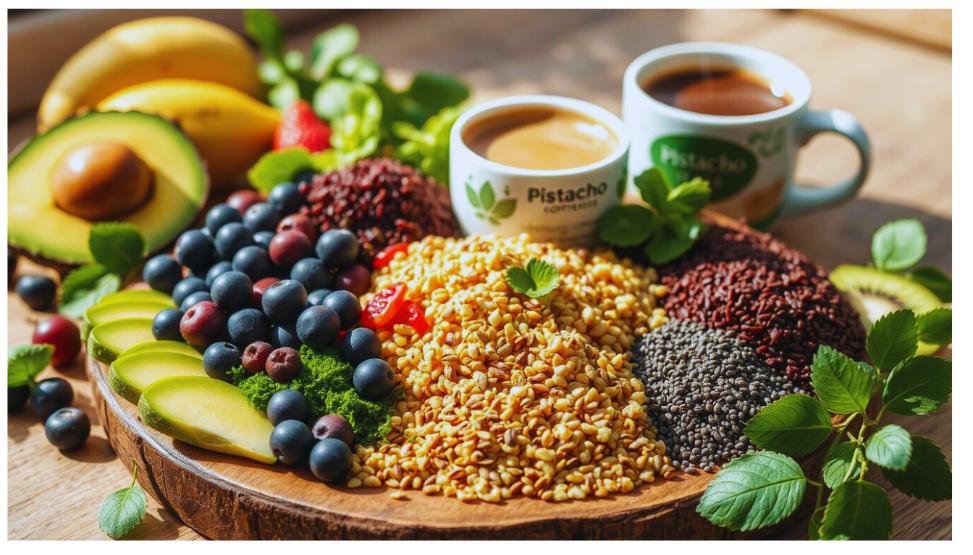
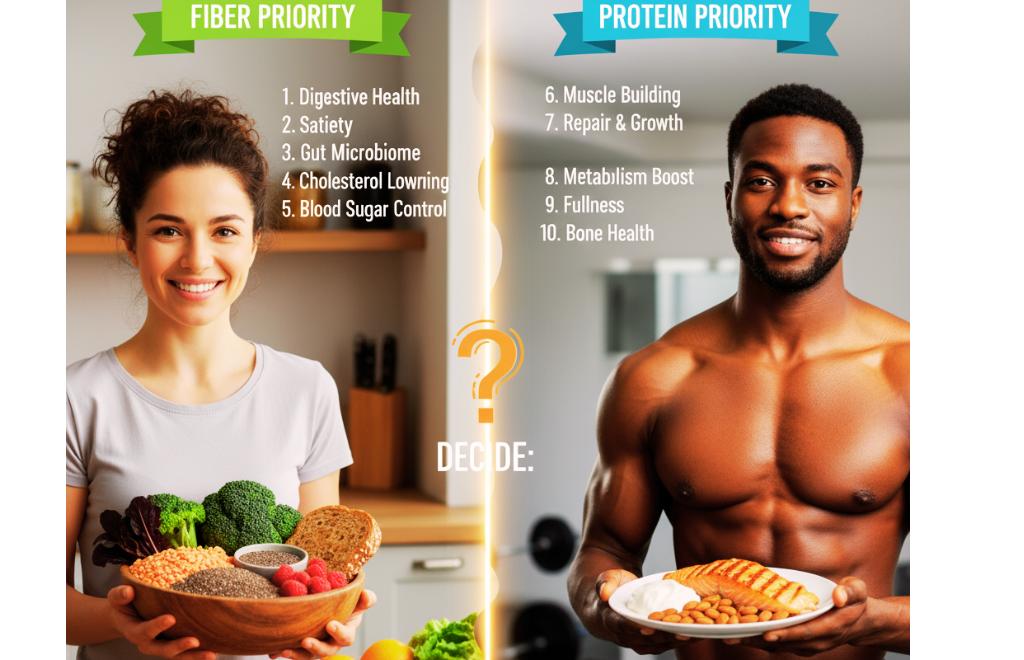
Eating the right food keeps your body strong and happy. But many people wonder, which is more important . Both help your body in special ways. This easy guide will help you understand fiber vs protein, and which one you should focus on more.
What Is Fiber?
Fiber is a type of food your body cannot fully digest. It comes mostly from plants. You can find fiber in fruits, vegetables, beans, and grains.
Fiber helps your tummy work well. It keeps you full longer, helps you go to the bathroom easily, and keeps your heart healthy. It also helps control your blood sugar.
When you eat fiber each day, your body feels light and your tummy stays happy. That’s why fiber is very important in the talk.
What Is Protein?
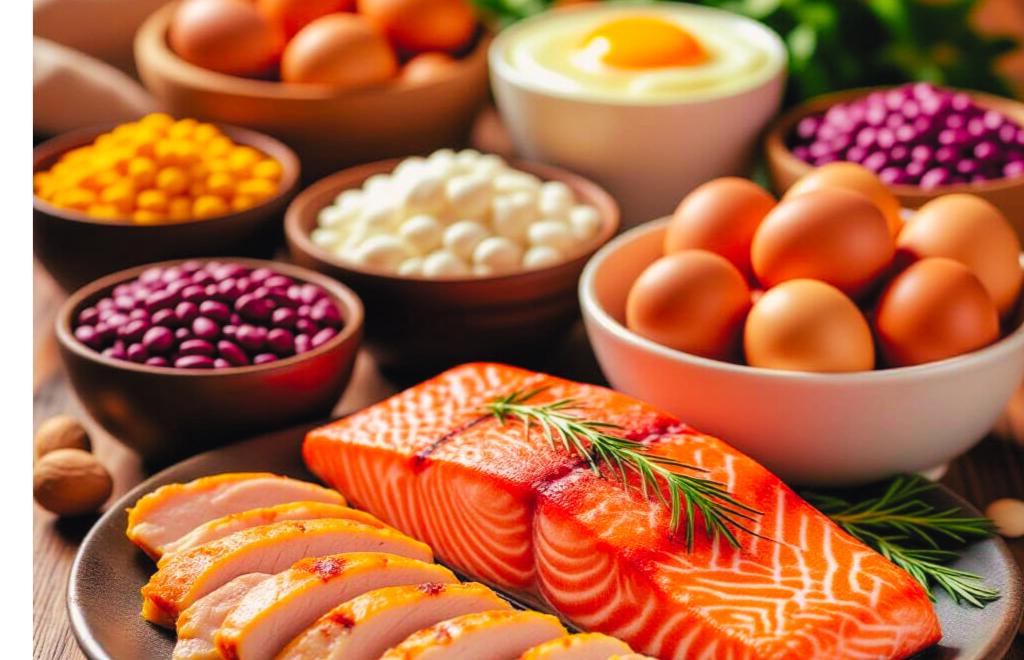
Protein is what builds your muscles, bones, and skin. It helps fix parts of your body that get tired or hurt. You can find protein in eggs, meat, fish, nuts, milk, and beans.
Protein gives you energy and helps you stay strong. When you eat enough protein, your body can grow and heal better. In the comparison, protein plays a big role in keeping your body fit and powerful.
Why Fiber Matters

Fiber keeps your body clean inside. It acts like a broom that sweeps waste out of your system. When you eat enough fiber, you feel light and full of energy.
Here’s why fiber is good for you:
- Helps control hunger
- Keeps your stomach healthy
- Helps your heart stay strong
- Lowers bad cholesterol
- Helps your body control sugar
When talking about fiber vs. protein, remember — fiber is key for a clean, happy tummy.
Why Protein Matters

Protein is the builder of your body. It makes your muscles strong and helps your body grow. It also helps make your hair, nails, and skin healthy.
Here’s what protein does for you:
- Builds and repairs muscles
- Makes your body strong
- Helps you heal faster
- Gives long-lasting energy
- Keeps your immune system strong
So in the fiber vs. protein debate, protein is like the brick that builds your body.
Fiber vs Protein They are Different
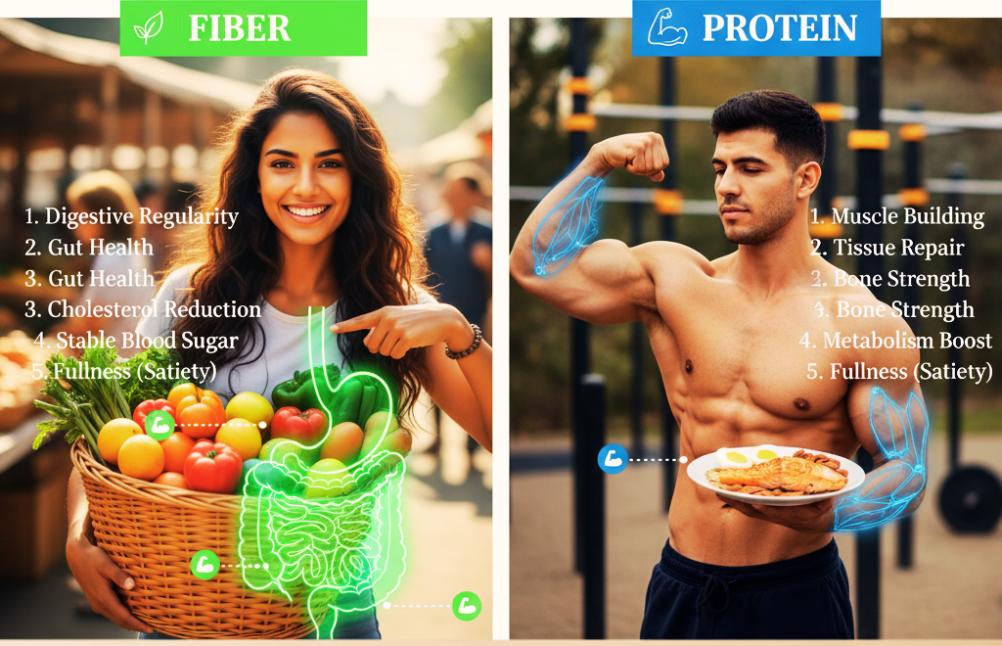
Fiber and protein help your body in different ways. Let’s see how they differ:
| Feature | Fiber | Protein |
|---|---|---|
| Comes From | Plants | Animals & plants |
| Helps With | Digestion | Muscle building |
| Keeps You | Full longer | Energetic |
| Good For | Heart, stomach | Muscles, skin |
| Found In | Fruits, veggies, grains | Eggs, meat, nuts, beans |
Both are very important. It’s not about picking one — it’s about balance.
When we say fiber vs. protein, we really mean learning how both work together to make your body strong and healthy.
How Much Fiber Do You Need?
Most people need about 25 to 30 grams of fiber each day. But many people eat less than that. Try adding fiber-rich foods to each meal.
Some easy ways to add fiber:
- Eat fruits like apples, bananas, and berries.
- Eat veggies like carrots, beans, and broccoli.
- Choose whole-grain bread instead of white bread.
- Snack on nuts or seeds instead of chips.
Adding fiber slowly to your diet helps your body get used to it. Drink water, too. Water helps fiber do its job better.
How Much Protein Do You Need?
The amount of protein you need depends on your age and activity. Most people need around 45–60 grams each day.
You can get protein from:
- Eggs, fish, or chicken
- Milk or yogurt
- Nuts and seeds
- Beans and lentils
When you mix protein with fiber, your meals become more powerful. That’s the secret behind fiber vs. protein — they work best together.
You Need Both Fiber and Protein
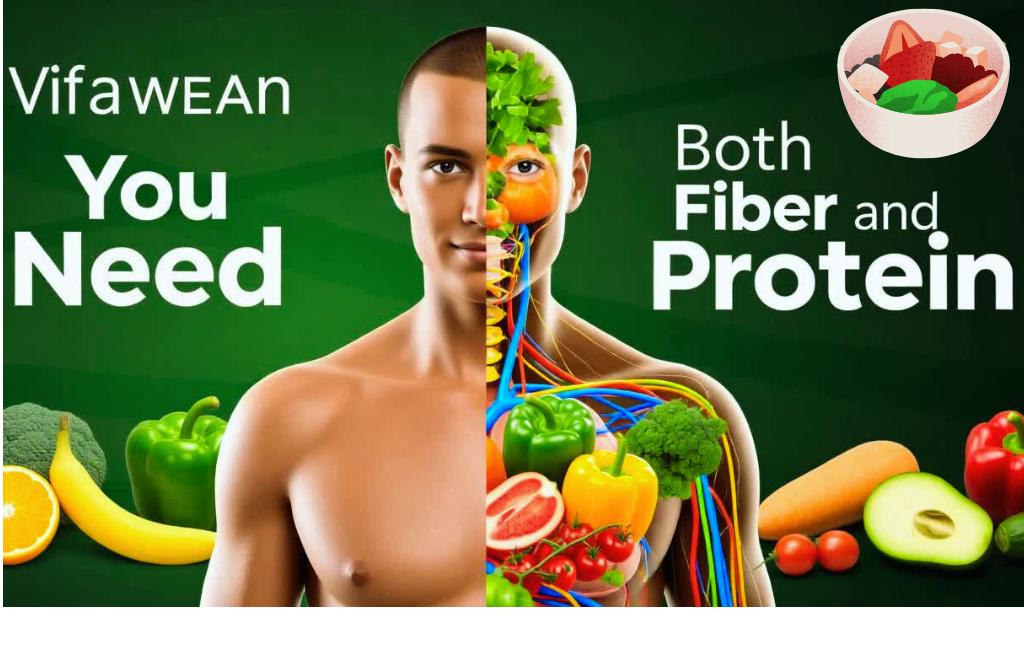
Your body needs both fiber and protein to stay healthy. Fiber helps your stomach and heart. Protein helps your muscles and bones.
When you eat both, your body feels full, strong, and balanced. Fiber keeps your tummy calm. Protein keeps your energy high.
Think of fiber and protein as a team — not a fight. They work together to make you feel your best.
How to Balance Fiber vs Protein in Your Diet

Here are some simple ways to keep both fiber and protein in your meals:
- Start with a good breakfast. Eat oats with fruit and nuts.
- Add beans to your lunch. They have both fiber and protein.
- Snack smart. Try yogurt with seeds or apples with peanut butter.
- Choose whole grains. Brown rice and quinoa have both fiber and protein.
- Eat a mix of colors. Fruits and veggies add fiber and vitamins to every meal.
When your plate has color, crunch, and balance, you win the fiber vs. protein game.
Common Mistakes People Make
Many people think more protein means better health. But too much protein can make your body tired or stressed.
Some also skip fiber-rich foods, which can cause tummy pain or slow digestion.
The smart way is balance. Eat a mix of both. Don’t forget water and fresh fruits — they help both fiber and protein work better.
How Fiber Helps You Feel Full
Fiber takes time to digest. That means it helps you feel full longer. When you eat enough fiber, you snack less and stay satisfied.
This is why fiber helps with weight control. It stops sudden hunger and keeps your energy steady. So in fiber vs. protein, fiber wins the “fullness” prize!
How Protein Helps You Build Strength
Protein is what your body uses to build and fix muscles. If you play sports, run, or exercise, you need protein to stay strong.
It also helps your body recover after hard work. In the debate, protein wins for muscle power.
Which Should You Choose?
You don’t have to pick one. Both are key for good health. Fiber helps your inside stay clean. Protein builds your outside strong.
If you want to feel light, eat more fiber. If you want to grow strong, eat more protein. The best diet has both every day.
So in fiber vs. protein, the answer is — choose both, but balance them smartly.
Conclusion :
Your body is like a machine that needs the right fuel. Fiber vs. protein is not a fight — it’s teamwork. Fiber helps your stomach and heart. Protein helps your muscles and energy.
Eat colorful foods. Mix plants, grains, beans, and nuts with meat or dairy. Small steps make big changes. When you balance fiber and protein, you’ll feel strong, light, and happy.
So, don’t pick sides. Let fiber vs. protein work together for your best health!
FAQs
Q1: What is the main difference between fiber and protein?
Fiber helps with digestion, while protein builds muscles and keeps you strong.
Q2: Can I eat too much fiber?
Yes. Too much fiber can cause gas or bloating. Add fiber slowly and drink water.
Q3: What are some foods that have both fiber and protein?
Beans, lentils, quinoa, and nuts have both fiber and protein.
Q4: Is protein more important than fiber?
Both are important. Protein builds your body, and fiber keeps it clean and healthy.
Q5: How can I add both to my diet easily?
Eat balanced meals. Try oats with nuts for breakfast or beans with veggies for lunch.
Final Tip:
Health is not about choosing sides. In the fiber vs. protein world, balance wins every time. Eat smart, move often, and take care of your body — it’s the only one you have.